RESEARCH / SUPPORTING FIGURES
Figures & graphs.
From my research project: Auditing AI Generated Hiring Assessments.
This applied research project audited ChatGPT's reliability and fairness as a candidate interview evaluator. By comparing ChatGPT generated ratings to those of trained humans across 60 video interviews, the study revealed systematic bias patterns: ChatGPT consistently scored candidates higher (+0.88 points average), particularly underrating Black candidates and overrating middle aged candidates; patterns absent in human evaluations.
These findings demonstrate that AI evaluation tools, when used in sensitive decision making like hiring, require rigorous fairness audits and oversight before deployment, with clear implications for organizations considering using AI to influence their hiring decisions.
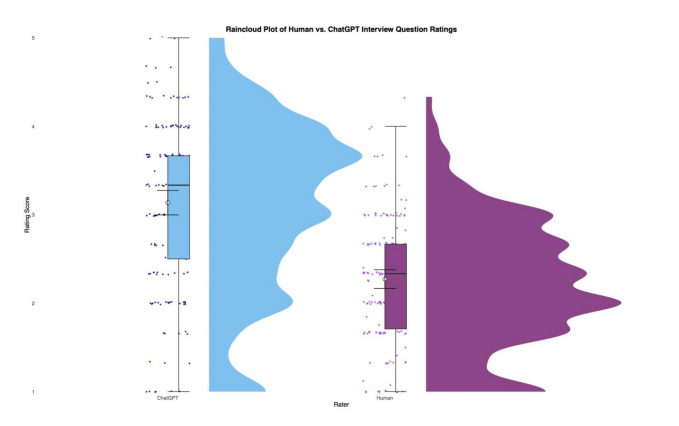
Figure 2: Rating Distribution Comparison: AI vs. Human Ratings
ChatGPT ratings (left, blue) consistently skewed higher than human ratings (right, purple), with greater variability in score distribution. While both raters followed the same 5 point BARS scale, AI showed systematic inflation with mean scores of 3.14 vs. 2.27 for humans; a difference of 0.88 points representing a large effect (d = -1.08).
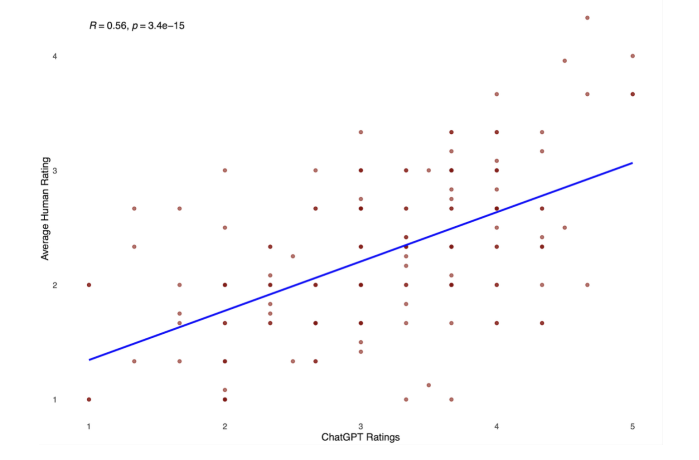
Figure 3: Overall Correlation between ChatGPT & Human Ratings
Scatterplot illustrating the relationship between ChatGPT generated interview ratings and average human assigned ratings. Each point represents a single participant, and the blue line depicts the least squares regression line. The correlation coefficient (r) and corresponding p value are displayed in the upper left corner. Human ratings reflect the average of four trained raters, who demonstrated high inter rater reliability and consistent evaluation standards.
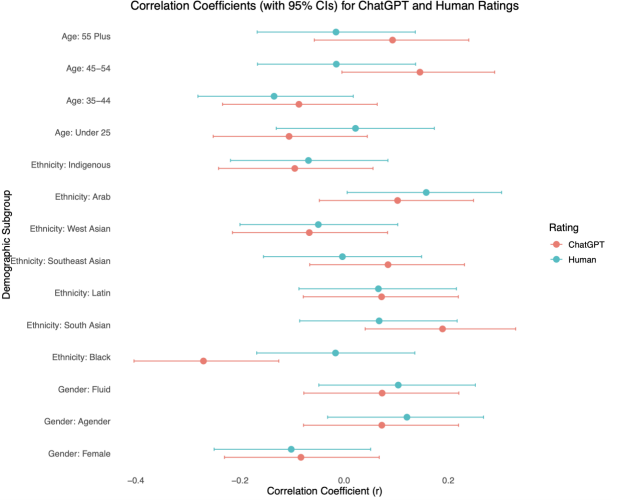
Figure 4: Difference in Correlations (r) Between ChatGPT and Human Ratings, By Demographic Subgroup
Correlation coefficients between demographic subgroup membership and interview ratings, separately for ChatGPT generated and human assigned scores. Each point represents the Pearson correlation (r) for a given demographic subgroup, with horizontal bars indicating 95% confidence intervals. Subgroups are ordered vertically by category, and rating sources are color coded and shown side by side for direct comparison.